By Olly Reed, Growth Director
Few things are more British than spending weeks planning an autumn event only to discover that the most important member of your marketing team is, once again, the weather.
Whilst all the Halloween pumpkin pics feature beautiful autumnal sunshine, storms Austin and Boelo, which sound less like weather systems and more like two men who run a craft brewery in Hackney, came crashing down and caused havoc for the first weekend of the holiday.
Whilst things got slightly less stormy, October half term 2026 provided a particularly unsubtle demonstration. At one end of the market, indoor attractions were reporting sell-out days and record-breaking performances. At the other, outdoor operators were cancelling events, moving tickets and watching carefully built Halloween plans disappear beneath several inches of rain.
It would be easy to write the whole thing off as a weather story. I don’t think it was.
The weather undoubtedly decided who had an easier week. But underneath it sat something more interesting: visitors becoming increasingly selective about what they book, when they book it and what they believe represents genuine value.
A very good half term… provided you had a roof
Across the digital advertising campaigns we manage at Navigate, October generated more than £4.3 million in attributed revenue. That’s a lot of tickets, but the headline disguises an unusually divided half term.
Indoor attractions were, in several cases, flying. Across museums, aquariums, science attractions and other indoor experiences, we saw record-breaking days, sell-outs and very strong trading. Science centres led the ROAS charge with £28 back for every £1 spent on advertising.
The outdoor picture was not universally bleak either. Some established seasonal events still grew despite the storms, and in a few cases Halloween-specific activity outperformed the wider attraction around it.
Our booking data also showed mature Halloween events finishing ahead of the previous year, with particularly strong demand arriving late for some products. That distinction matters. Poor weather can suppress general day-out demand, but a sufficiently established event can become a destination in its own right.
There was another complication too. Bad weather did not simply stop people booking. In some cases people had already booked and then did not come. One operator told us that on a particularly difficult weather day, only a minority of pre-booked visitors actually arrived. Others had to move tickets into later dates. So the weather did not just shrink demand. It disrupted and displaced demand that attractions had already successfully generated.

Programming is still proving the reason to visit
There was another distinction between the attractions doing well and those struggling that had relatively little to do with whether they were indoors or outside.
The strongest performances tended to come from attractions giving people a very clear reason to visit now. Our data showed several operators having a much better half term than last year and finishing significantly ahead of target, with events and programming cited as the main driver. Another museum group was also ahead of last year and ahead of target, again with programming playing a major role by giving people a reason to leave the house, or face missing the limited-run exhibition.
We saw the same pattern in Halloween-focused programming. Attractions that have spent years building recognised scare events, pumpkin festivals and Halloween experiences generally performed well. Adult scare nights were particularly strong. Halloween itself landed well, especially Saturday events. But newer Halloween propositions struggled early on. There is a useful lesson in that: you cannot necessarily put some pumpkins in a field, write “Halloween” on the advertising and expect demand to appear.
Successful events have built something more valuable than awareness. They have built expectation. Families know roughly what they are going to get. Teenagers talk about the scare nights. Previous visitors return. Photos circulate. Traditions form. The event itself becomes an asset.
It is one reason I think attractions need to look beyond individual campaign performance when judging seasonal events. The first year of a Halloween event may not make spectacular money. But if the experience is good enough, year five might be selling before the advertising really gets going. The attractions with mature events are benefiting from decisions made years ago.
Visitors have not stopped spending, but they are choosing harder
I imagine the phrase “cost of living” has become so familiar in attraction meetings it ranks alongside “short staffed” and “why has the coffee machine broken again?” as one of the most repeated phrases. Hopefully not so familiar that it has lost its meaning.
There is clearly still pressure on the public. Our data also showed a major heritage attraction sitting slightly behind both last year and target, with consumer confidence and the cost of living identified as the main influence.
That does not mean families have stopped spending money on days out. The millions of pounds of ticket sales generated during half term rather prove otherwise. What seems to be changing is the threshold for spending it. Families are making choices. Not simply: “Can we afford £60?” but “Is this worth £60?” That is a much harder question for marketers.
Price and value are related, but they are not the same thing. A £25 ticket for something forgettable can feel expensive. A £50 ticket for something a child talks about for six months can feel entirely reasonable. You can see this tension particularly clearly in seasonal experiences. Take Santa. Which, admittedly, sounds like the title of a Christmas crime film. When we’re talking Santa experiences, there is a huge difference between walking into a room, meeting somebody wearing a questionable beard for four minutes and leaving with a plastic toy, and an experience where the setting, storytelling, staff, pacing and attention to detail make the visit feel genuinely special. Both might be described as a “Santa experience”. They are not the same product.
Pumpkin events are reaching a similar point. The sector now has everything from relatively simple pumpkin picking through to elaborate, highly produced Halloween experiences, yet pricing does not always reflect the difference particularly well.
Some operators may be charging too much for an ordinary experience while others may actually be charging too little for a brilliant one. Getting that right is becoming increasingly important because consumers appear more willing to interrogate the value behind the ticket price.
Discounting worked (of course) but that does not mean it is always the answer
There was plenty of discounting around this October, and in several cases it clearly moved demand. At one outdoor attraction, a strong early offer helped drive bookings before the worst weather arrived. That early momentum became particularly valuable once storms caused cancellations later in the period. Elsewhere, heavily promoted offers generated bookings, while targeted family propositions and local resident campaigns also produced positive results. That is encouraging, but there is a danger in drawing the wrong conclusion.
Promotions are useful when they remove a barrier, create urgency or give someone the nudge they need to make a decision. They become more problematic when the offer itself becomes the only compelling reason to visit. The stronger long-term position is still to build an experience people want and then use marketing to accelerate demand for it. A discount can make a good proposition easier to buy, but it struggles to make an indifferent proposition desirable.

Autumn arrived late, then all at once
There is also a slightly bigger question sitting behind October’s results. Did autumn itself arrive too late this year?
We came out of a long, hot summer into an unusually warm September. The psychological transition from summer to pumpkins, Halloween and Christmas felt compressed. Then suddenly half term arrived. Operators were trying to sell autumn experiences while, only a few weeks earlier, much of the country was still sipping iced lattes and behaving as though summer had not quite finished. That potentially creates a calendar problem as much as a climate one.
Seasonal events rely on anticipation. People have to mentally enter Halloween before they buy Halloween. They have to start thinking about Christmas before they book Christmas. If the seasons become less distinct, the selling window becomes less distinct too. And the next warning light is already flashing.
Early Christmas performance in our data is mixed. In several places, Santa bookings are behind where they were at the same point last year. There are notable exceptions, and some attractions are performing very strongly, but it is certainly not a universally buoyant market. That does not necessarily mean Christmas will be poor. We have spent most of 2026 watching booking windows shorten, and it may simply mean visitors are not prepared to commit as early as operators would like them to. Which presents the industry with the same uncomfortable challenge again: businesses need certainty much earlier than consumers appear willing to provide it.
What October actually tells us
Perhaps the biggest mistake would be to look at October half term and conclude that indoor attractions won and outdoor attractions lost. They did, broadly. But nobody can build a five-year strategy around hoping for rain if they run a museum or sunshine if they run a zoo.
The more useful lesson is what happened within those categories. Attractions with established events, strong programming and a clear proposition generally had more resilience. Operators with reasons for visiting beyond simply “we are open this half term” were better placed to stimulate demand. And visitors continued to spend when they believed the experience justified it. Weather exaggerated those differences. It did not create all of them. The visitor economy is increasingly operating in a world where people book later, compare harder and change their plans faster. They are exposed to enormous numbers of leisure options and increasingly comfortable waiting until they know the weather, the family diary and the bank balance before making a decision.
For operators, that means there is less room for passive marketing. Being open is not an event. Having pumpkins is not necessarily a proposition. Running an advert is not, on its own, a reason for somebody to visit. The attractions performing best are increasingly those joining those pieces together: a strong experience, sensible pricing, distinctive programming and marketing capable of reaching people at the point they are actually ready to make a decision.
October half term was messy. There were record days, cancelled weekends, strong returns, heavy discounting and plenty of nervous checking of weather apps. In other words, fairly representative of running a visitor attraction in Britain in 2026. If you are already thinking about how to make 2027 a stronger year, whether that means growing visitor numbers, improving digital advertising performance, sharpening your seasonal campaigns or simply getting a clearer view of what is and is not working, we should talk.
At Navigate, we work across the visitor economy every day, so we are able to bring together what we are seeing across attractions, campaigns and visitor behaviour, and turn that into practical decisions.
If you want to talk through your 2027 plans, get in touch.
Do you want more real-world examples? Data? Trends?
This article only scratches the surface. We’ll be going much deeper into Navigate’s autumn and winter data: the numbers behind the headlines, the differences between attraction types, what changed between in 2026, where marketing performance held up, where it didn’t, and what all of this might mean for 2027.
You can be the first to hear this information by filling out how your October Half Term was here.
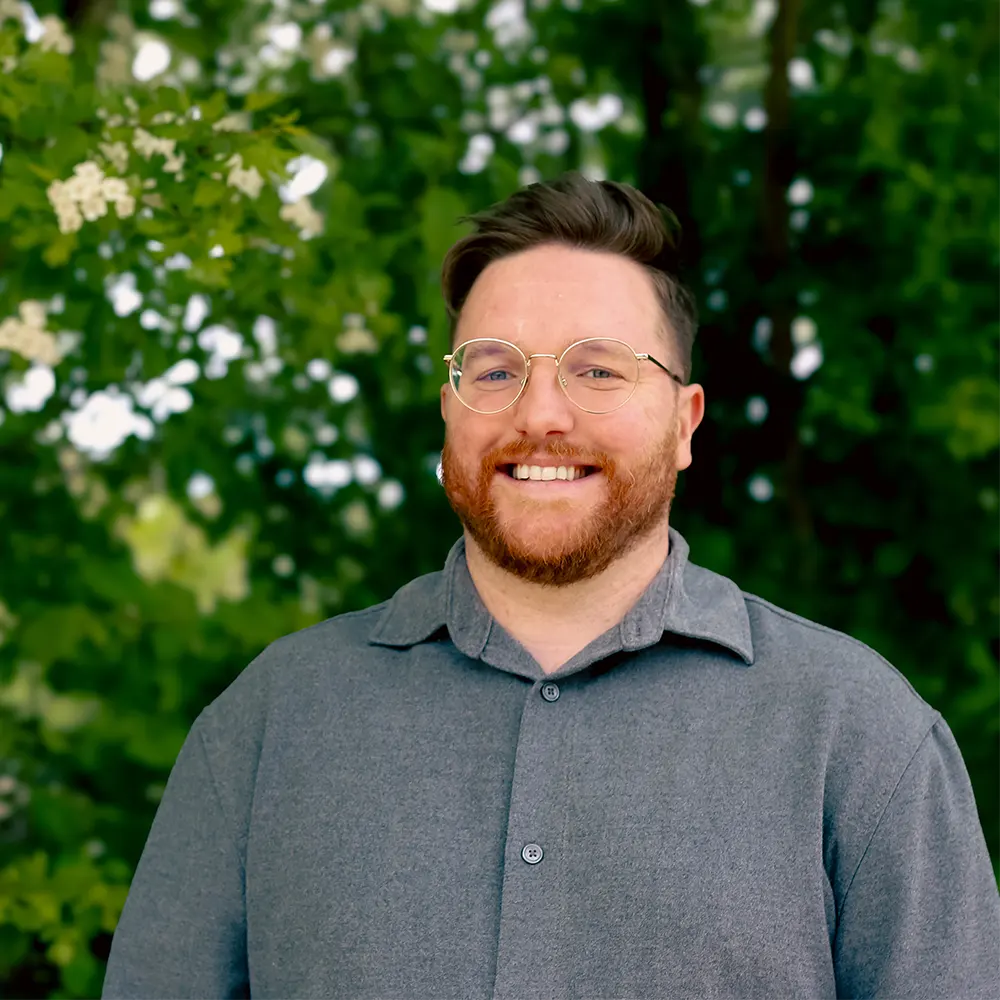
By Olly Reed, Growth Director, Navigate
Olly Reed is Growth Director at Navigate, helping visitor attractions across the UK understand their audiences, attract more visitors and grow sustainably. With nearly 20 years’ experience in the visitor economy, including 14 years working inside attractions and charities, he brings together audience insight, marketing strategy and commercial thinking.
Working with more than 50 UK attractions, Olly regularly speaks and writes about visitor behaviour, market trends and the future of the sector. He also led Navigate’s national weather campaign with Chester Zoo, challenging how forecasts are communicated and highlighting the very real impact Britain’s weather has on days out.
Let's talk
Looking for more information? Fill out the form below to start a conversation, or book a quick chat with me at a time that suits you by clicking here.